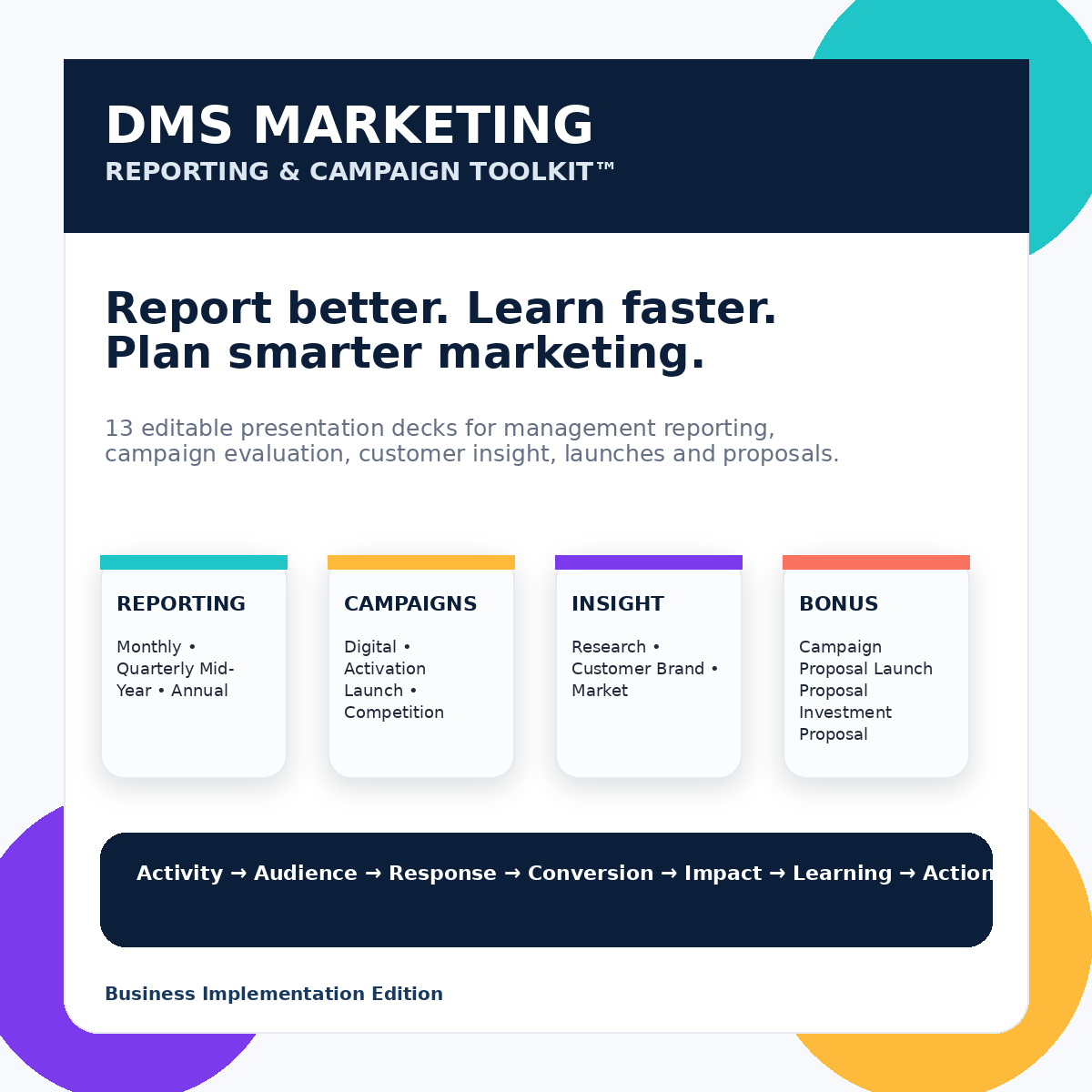
The DMS Marketing Reporting & Campaign Toolkit gives marketing teams a ready-to-use system for management reporting, campaign evaluation, customer research, product or service launches, competitive intelligence and investment proposals — without building every presentation from scratch.

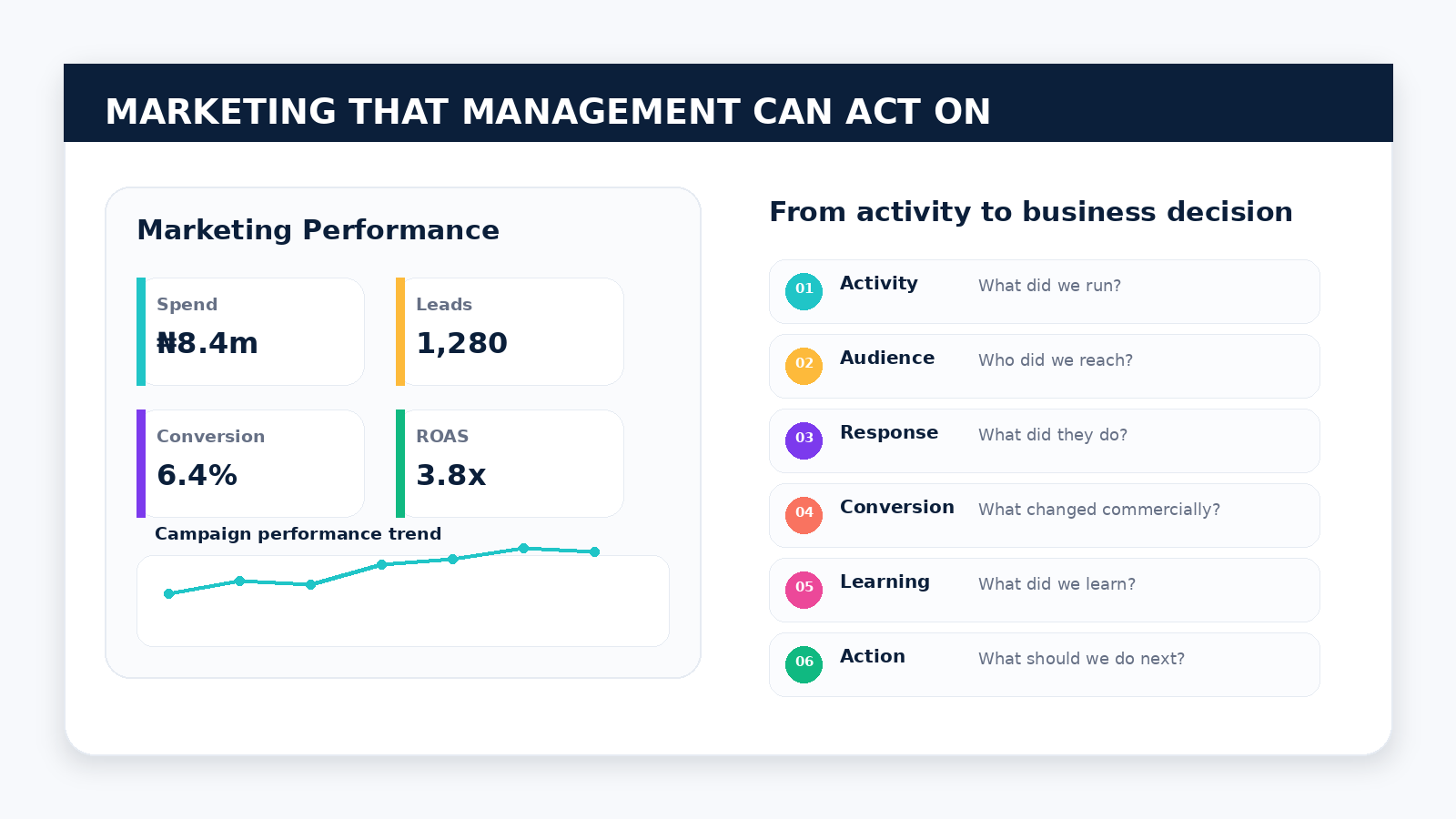
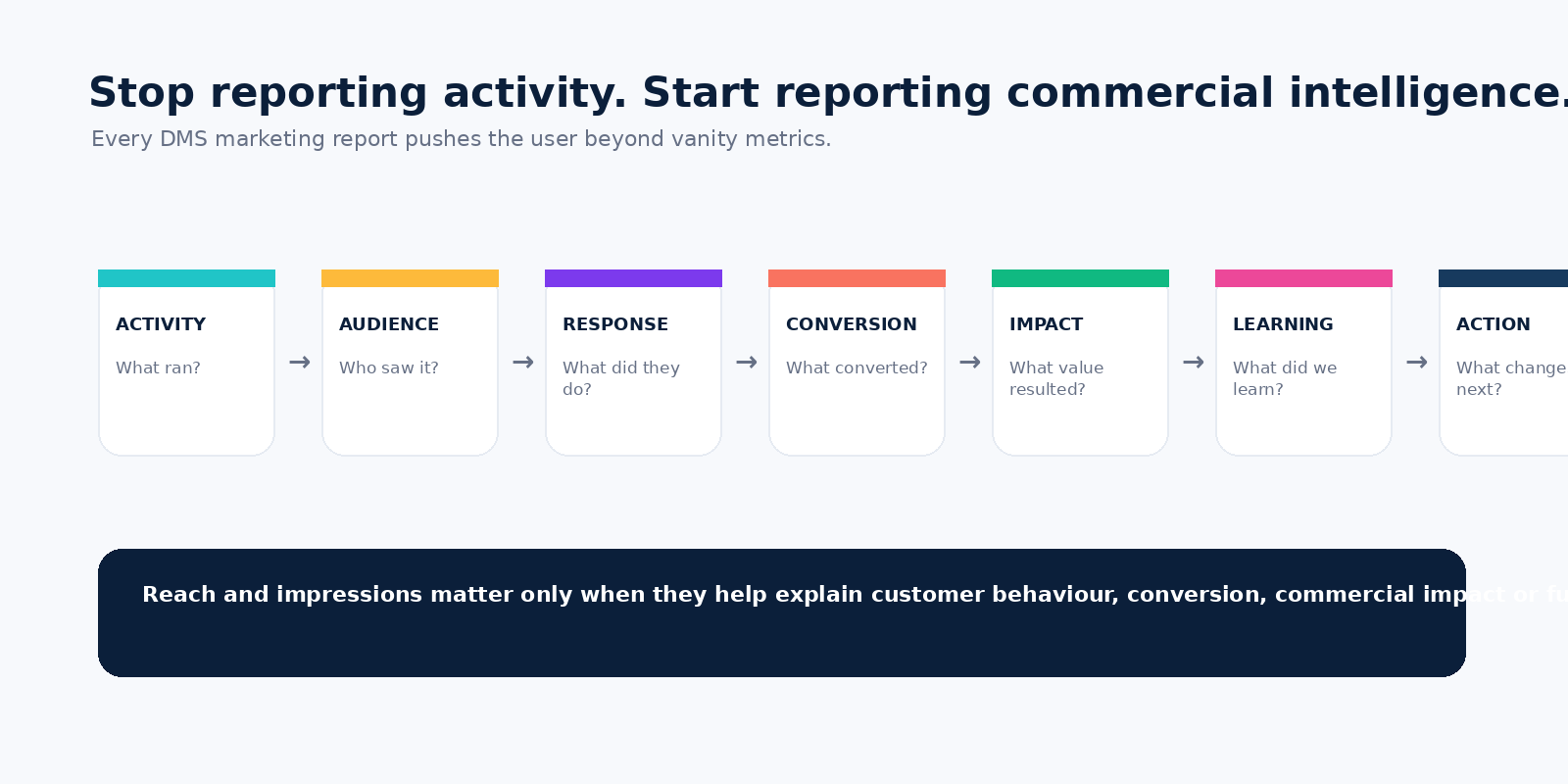
A strong marketing report should help management understand what activity ran, who it reached, what response it created, whether that response converted, what business value resulted, what was learned and what should happen next.

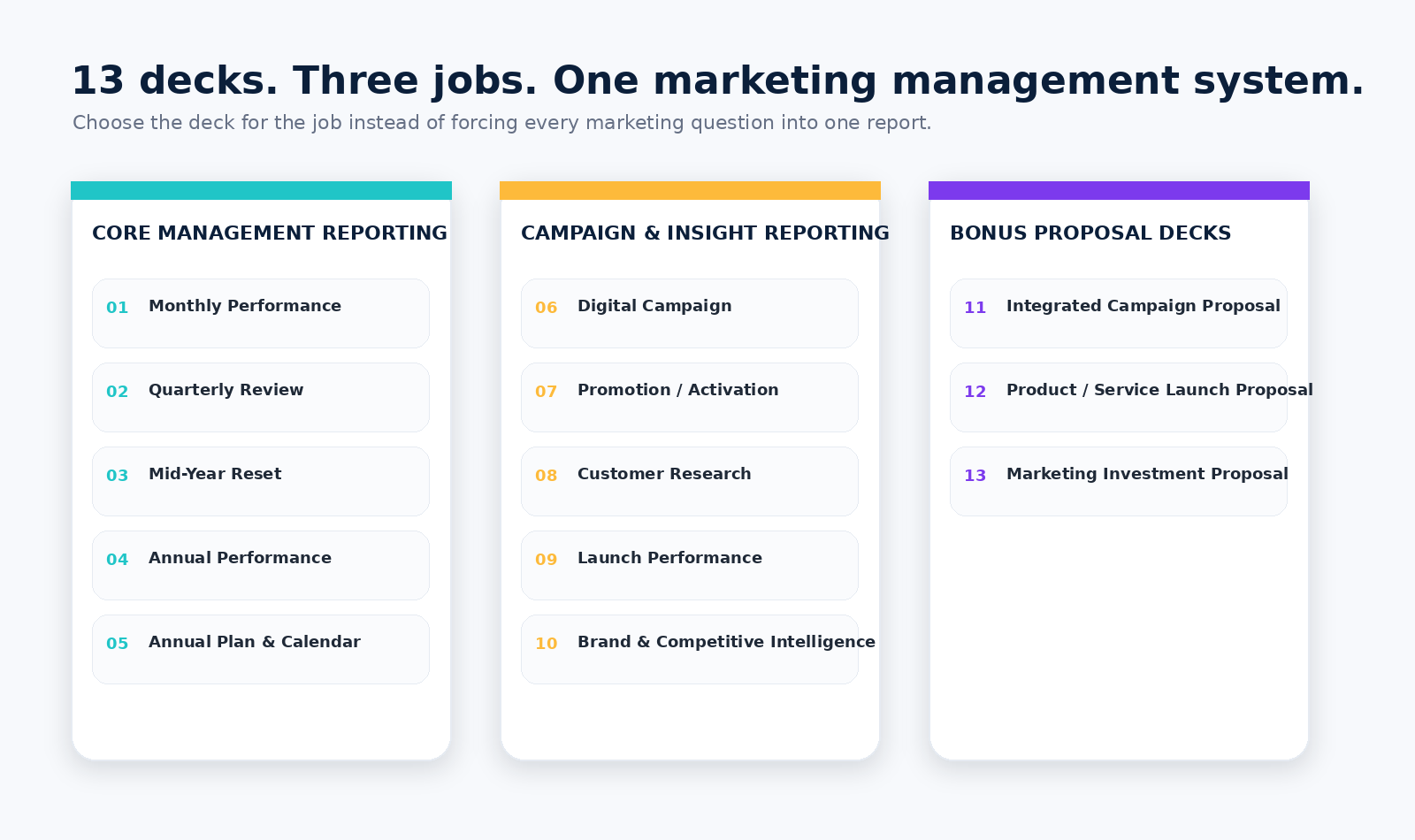
Instead of one oversized presentation, choose the deck that matches the question in front of you.

Reach and impressions have a place. But management still needs to know what happened after the audience saw the campaign.

Spend, reach, engagement, traffic, leads, conversion, CAC, ROAS, creative performance and channel learning.
Sampling, exhibitions, roadshows, in-store promotions, demos, consumer engagement, redemptions, sales and photo evidence.
Quantitative and qualitative studies, respondent profile, findings, comments, pricing feedback and business implications.
Readiness, awareness, trial, sales or bookings, distribution/capacity, customer response, budget and next 90-day action.
Pricing, promotions, launches, messaging, store/channel evidence, share of voice, customer sentiment and recommended response.
Quarter-by-quarter campaigns, always-on activity, objectives, audiences, channels, budgets, KPIs and the annual calendar.

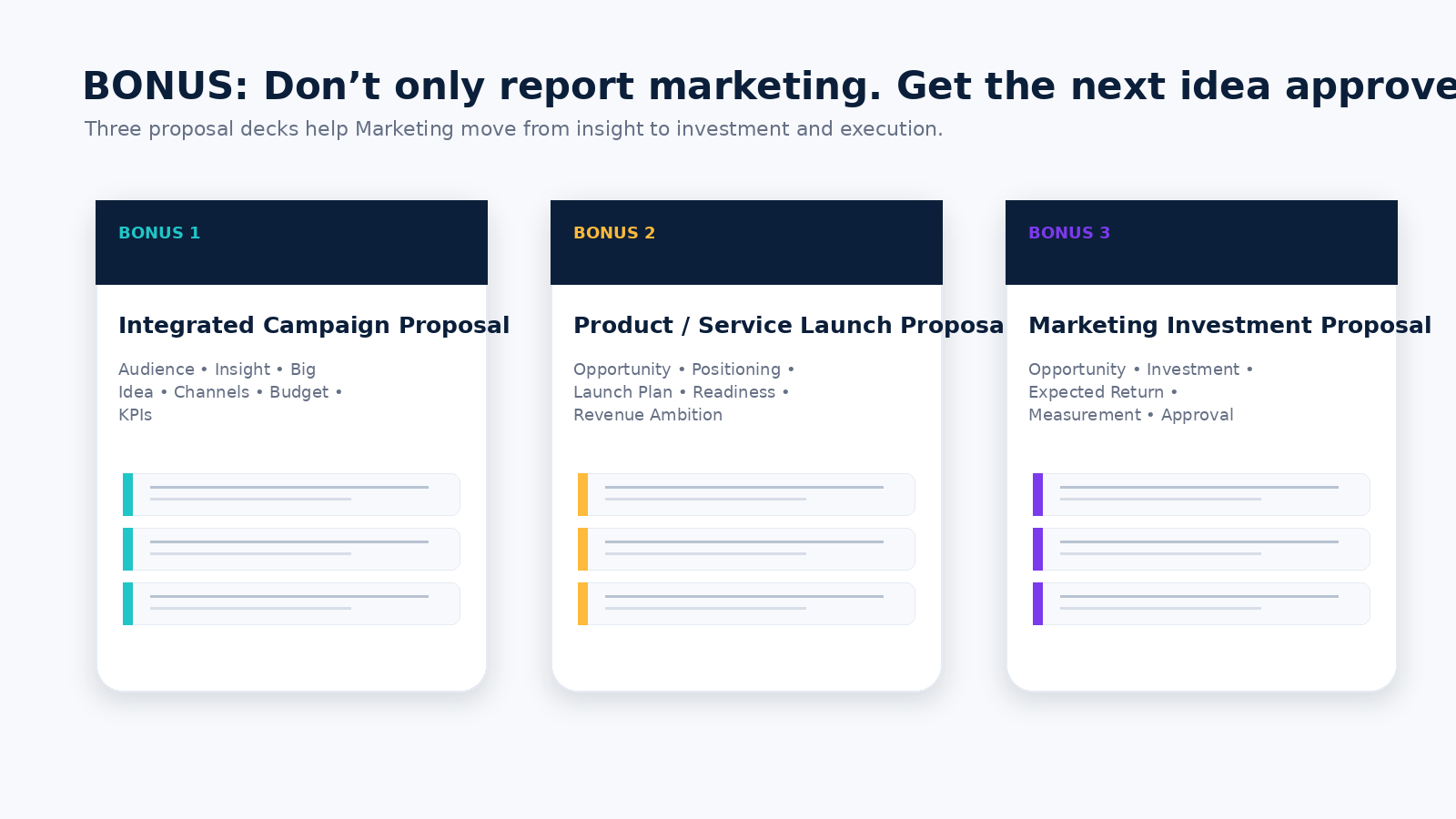
Marketing also needs to win approval for what happens next. The bonuses help structure the commercial case before money is committed.
Build professional reporting and proposals faster, with a consistent structure for management meetings.
Get better visibility into what Marketing is doing, what is working and where investment should go next.
Use a stronger framework for client campaign reporting, research readouts, launch reviews and proposals — subject to the DMS licence terms.
Rename product, SKU, store, booking, package, service, branch or customer fields to fit the commercial model.
“The goal is not to prove Marketing was busy. The goal is to show what Marketing learned, what changed commercially and what management should do next.”
Standalone editable charts. No external Excel links. Right-click a chart, choose Edit Data, replace the sample figures and update the management story.
No. Replace sample text and use Edit Data on native charts. The guide explains the workflow.
Yes. Product/SKU terminology can be replaced with service, package, booking, programme, subscription or contract terminology.
Yes. It includes promotions, sampling, exhibitions, activations, research, launches and store/market evidence as well as digital campaigns.
No. It also includes annual planning plus three proposal decks for campaigns, launches and marketing investment.